Why I wrote this.

I wrote this book at a very different time in my life.
I wrote this book when I had decided to change how I lived and loved.
I was middle-aged, my child was growing up, I had space to think, time to consider. And I had decided that I didn’t want to be a wife anymore.
I had married in my mid-twenties, and it was the first time I had ever lived with someone away from home. For someone trying to convince the world I was able and typical, this was the biggest achievement of all. I was now a wife and, not long after, a mother.
I felt the gaze lessen, the acknowledgment grow. I had done it. I had made it to a place of acceptance.
And so, as I seemingly found these roles that quietened and lessened me, I in turn became less than. What was most important was this façade, and this became a costly one.
My own needs, wants, and desires slowly faded. As we’re often told postpartum, “this time will fly,” and in many ways these sayings do come from truth.
Life took over. The needs of others.
And while I still read, wrote, drew, these reminders of what was me and what I could be were quietened by the voice of another, and a child with stuff going on.
My own needs were there, but I see them now as waves that would wash over me, only to be quietened by a voice that wasn’t mine, but was louder in its silence, its disapproval.
A lot can be said with silence.
I survived this time with an image I made in my head: brick walls that blocked me in and kept me safe. I wasn’t allowed to look over the top or out. It was lonely there, but it was safe.
I understand now, too, that what I called being “good” was often just being activated. Hyperaware. Watchful. Anticipating moods, needs, silences. Trying to stay safe by staying useful, agreeable, easy.
For so long I mistook people-pleasing for kindness, stoicism for strength.
But how long had I actually been living in an activated state? How much of my life had been spent surviving rather than inhabiting myself?
I was commended for my stoicism. After all, marriage is rewarded in its years, not its happiness, safety, or harmony.
So when I wrote this book, those walls had been removed. I was free.
What I wouldn’t know then was that while freedom was worth every penny, it would come at a cost. I won’t go into details, but when you have been good, very good, and then are naughty and leave, that silence will very quickly turn to anger. They will want to put you back behind your brick walls. They will do this any way they can.
Not long after I wrote this book and handed it over, I became very unwell. Again, I will save this for another time. But part of this process is realisation, and to get there you have to, well, realise.
Without the walls, the truth was there. Those walls that I was praised for, told were a great idea, I now knew were not built to serve me, but another. And once I could break free, once I could be me, they wanted me back trapped and silenced.
So this book was essential for me to write, because we have to go back to find out how we got here.
This is a story of what can happen when the girl who disappoints and confuses becomes the good girl. Who can shelve herself to become what others require. Who has learnt not to feel, and can bury the shame, loneliness, and harm by just trying harder.
Writing this, I was scared I would be told off, told it wasn’t true. But the more I wrote, the more I felt my strength coming back.
Truth is our truth. We must say what happened to us, what that felt like, what wasn’t okay. No more excuses.
I am not the good girl anymore.
That little orange-haired girl who wouldn’t abide the hairbrush or socks is back. I am angry, I am sad, I am happy.
This book is for the women who suspect something is wrong but cannot yet name it.
The women who learnt to survive by being good, agreeable, accommodating, needed, quiet.
The women standing at the edge of their own truth, frightened of what might happen if they finally look back.
Because I do not want our daughters learning what so many of us learnt: that compliance keeps you safe, that being easy to handle is the same thing as being loved.
I do not want them praised for how much discomfort they can endure quietly.
No one should have to stay behind the brick walls to be loved.
We must want more for our daughters, sisters, mothers, and ourselves than being praised for how well we survive our own unhappiness.
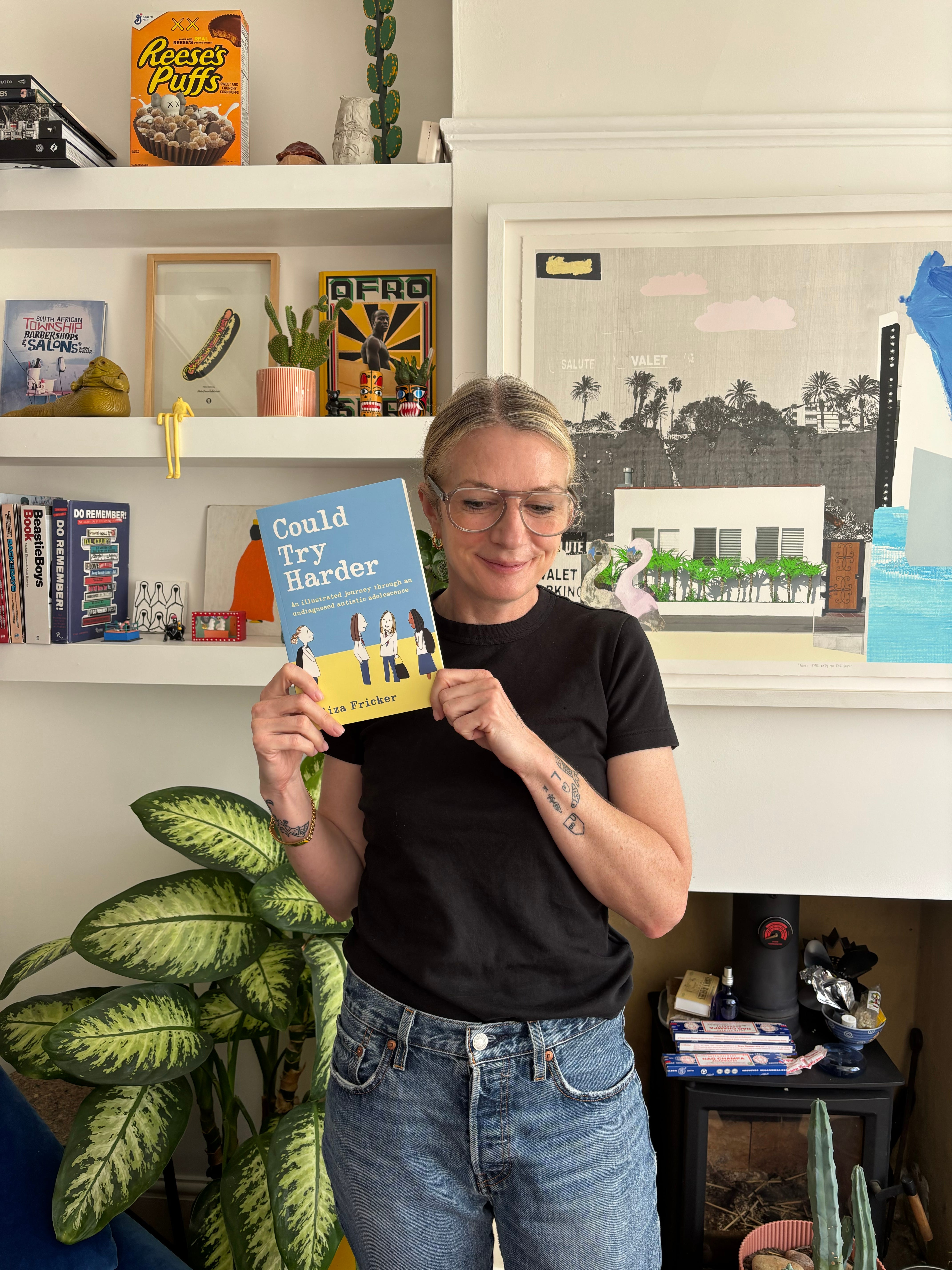
Could Try Harder by Eliza Fricker available to order from all good bookstores now.